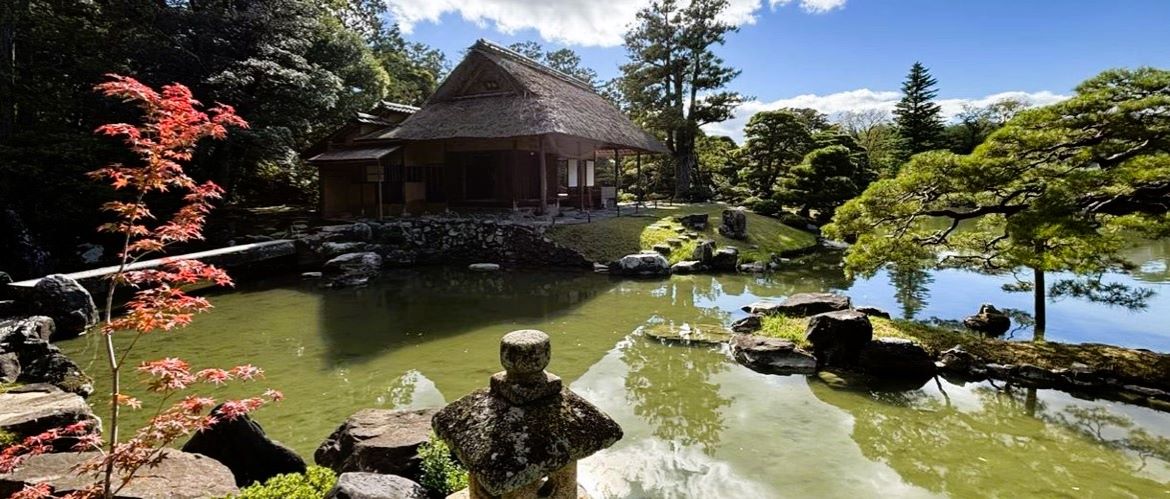
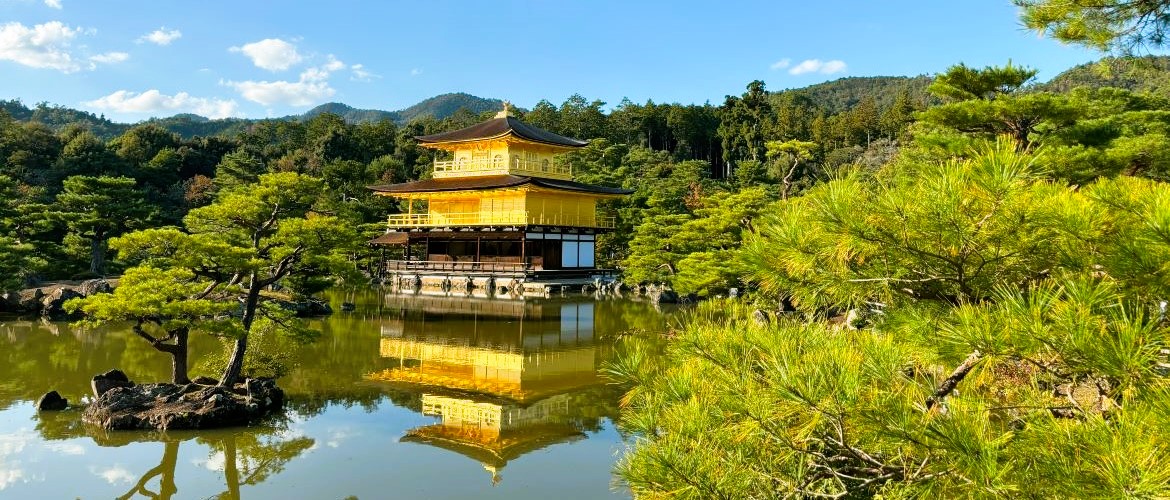
Best Japan tour packages by Laurus Travel – a reputable Japan tour company in Canada you can count on!
If you are looking for best Japan tour packages, you’ve just found the right Japan tour company in Laurus Travel.
Laurus Travel’s Japan tour packages feature expert local guides, small group size, fine dining, and first-class accommodations. Our Japan tour packages do not include international airfare but we would be glad to add them to your package on request. Whether you are from Toronto, Vancouver, Calgary, Edmonton, Regina, Winnipeg, Ottawa, Montreal or just about anywhere else in Canada, you can look to us for the most competitive airfare quote to go with your Japan tour package.
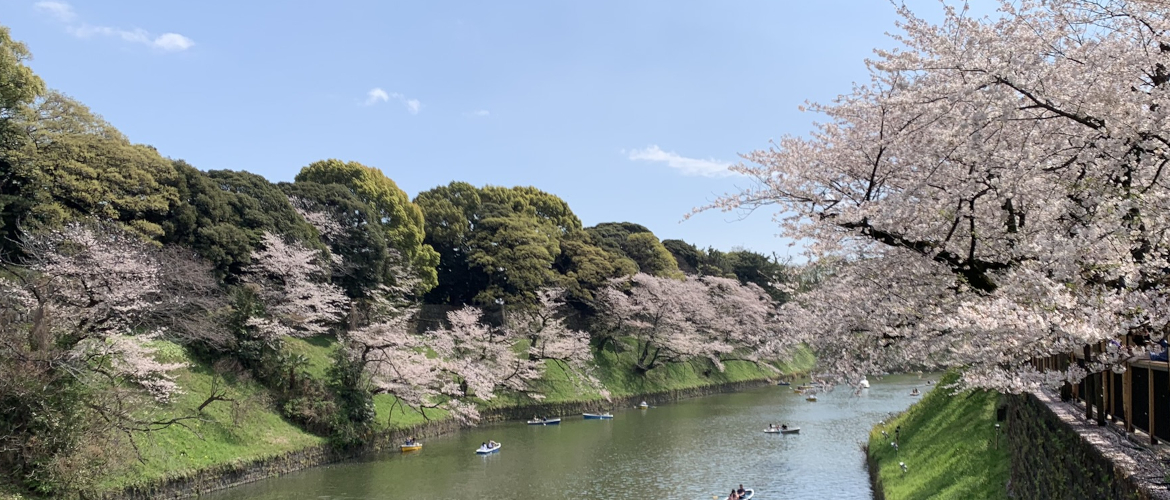
Among our Japan tour packages, the 12-day Essential Japan Tour has been particularly popular among travellers from Canada and USA. Those who prefer to stay in Japan a bit longer should find the 14-day of Japan and the 19-day Classic Japan ideal.
Interested in visiting South Korea as well? We have this 20-day Japan & South Korea? for your consideration.
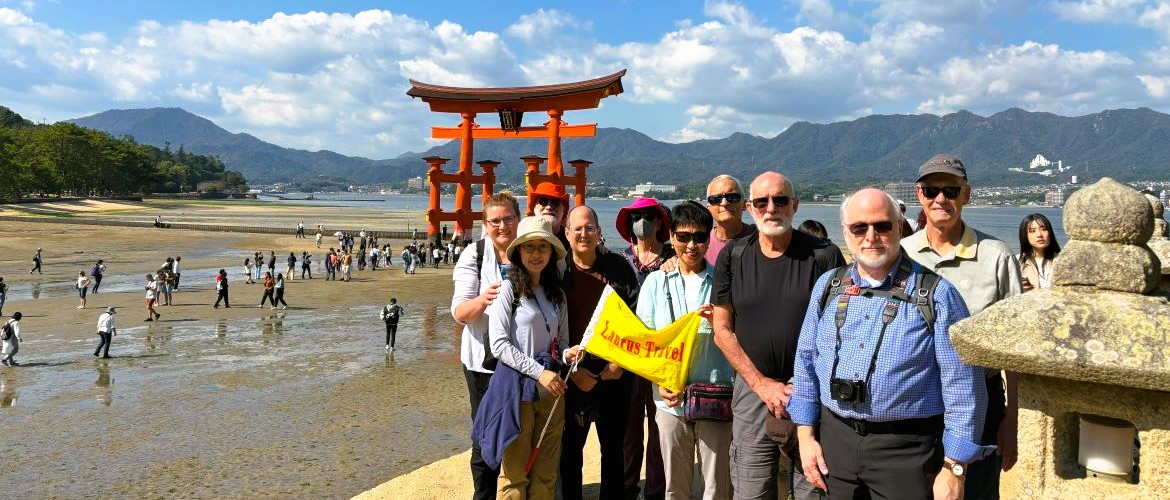
Best Japan Tour Packages – Recommended Itinerary
Tokyo – Mt. Fuji – Hakone – Kanazawa – Takayama – Shirakawa – Kyoto – Nara – Osaka
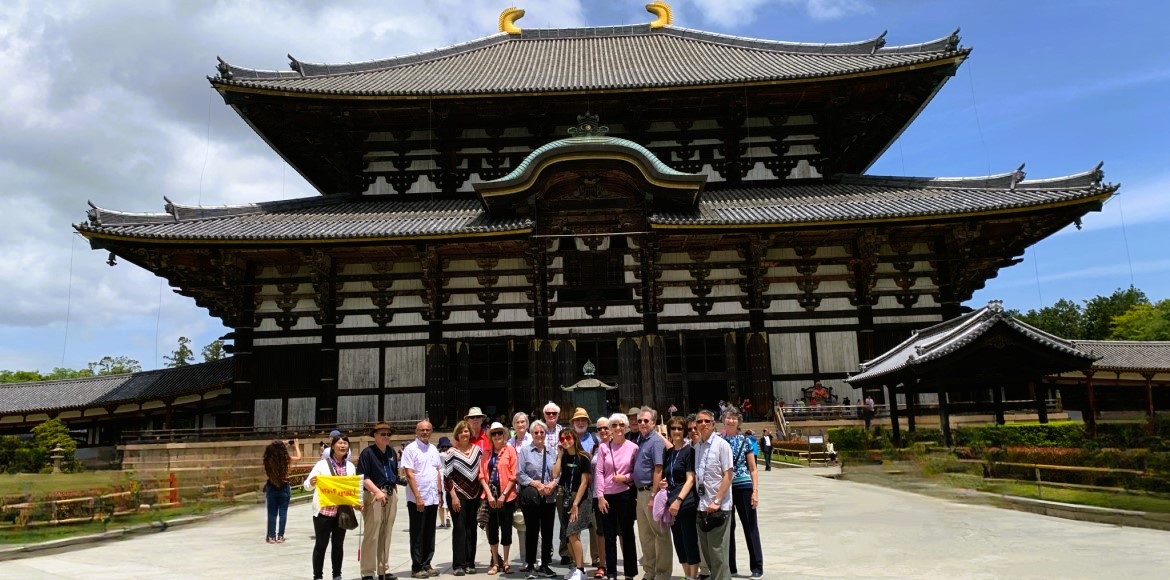
Join us on this exquisite small group Japan tour through the heart of Japan, where ancient traditions gracefully dance alongside the vibrant rhythm of modernity. In dynamic Tokyo and Osaka, neon lights and bustling energy of urban life pulse with the beat of contemporary Japan. As we wander through the poetic streets of Kyoto, where cherry blossoms and autumn leaves whisper tales of ancient elegance, we find ourselves embraced by the essence of a bygone era. And then there is the ancient capital of Nara, where sacred deer roam freely. Chances are, until now, you haven’t heard much about romantic Kanazawa and the mountain town called Takayama. Now is time to go find out why they are becoming so popular among overseas visitors.
Important Features
- Small group size (average 15, maximum 20)
- Expert tour leader and local guide(s)
- Premium hotels
- high-quality local and Western cuisines
- No shopping stops
- Sushi making lesson
- Kaiseki dinner featuring geisha dancer (maiko) performance
ITINERARY
Meal Code: B = breakfast / L = lunch / D = dinner
Day 1/Mon: Departing Home City
The journey begins with your transpacific flight departing from a city of your choice. You’ll lose a day upon crossing the International Date Line.
Day 2/Tue: Arrival in Tokyo
Welcome to Tokyo!
Please make your way to the hotel on your own. Detailed up-to-date information on how to get to the hotel will be provided in the final update two weeks before departure. Private transfer can be arranged on request.
Day 3/Wed: Tokyo (B/L)
Tokyo, literally meaning “eastern capital” and officially named Tokyo Metropolis, is one of the most populous mega-cities in the world with a population of 14 million. Formerly known as Edo, the city has been the de facto seat of the Japanese government since 1603 when shogun Tokugawa Ieyasu chose the city for his headquarters. The shogun (general) was a hereditary commander ceremoniously appointed by the emperor but held real power over the country during the shogunate period between 1192 and 1867. Edo was renamed Tokyo after Emperor Meiji moved his seat from Kyoto in 1868 when the last shogun was forced to return power to the imperial court. The city covers an area of 2,187 square kilometres following the merger in 1943 of the city of Tokyo and Tokyo Prefecture.
Our full-day sightseeing begins at the plaza in front of the Imperial Palace. A stroll across the plaza accompanied by commentaries on the imperial family and the history of Tokyo gets the tour off to a good start.
We then proceed to Senso-ji, the oldest Buddhist temple in Tokyo dating back to 628.
After lunch, we drive through the ritzy Ginza shopping district on the way to Meiji Jingu, a Shinto shrine dedicated to Emperor Meiji (1852 -1912) and his wife.
We end the day with a visit to the observation deck atop the Tokyo Metropolitan Government Building in Shinjuku. On a clear day, the visitor could see the peak of Mount Fuji which is located about 84 km to the west. The building complex completed in 1990 at a cost of US$1 billion consists of three main structures each taking up a city block. The architect of the Tokyo Metropolitan Government Building is Kenzo Tange (1913 – 2005), who in 1987 became the first Japanese to win the Pritzker Prize for Architecture.
Day 4/Thu: Tokyo – Mt. Fuji – Hakone – Tokyo (B/L)
We depart at 7:30 AM for a full-day excursion to Mt Fuji and Hakone.
Mt. Fuji, the highest mountain (3,776 metres) in Japan, is a two-hour drive from Tokyo. We stop by the Fujisan World Heritage Center to view the summit and learn about the history, formation and ecology of Mt. Fuji through exhibits and a short film. However, it is purely a matter of luck whether the summit is visible as Mt. Fuji is often shrouded in clouds. Our schedule does not include hiking the mountain – the trails are open between July and early September and it would take the average person at least six hours to hike to the summit even if one starts from the highest station at 2,305 metres above sea level.
We then proceed to Lake Ashi in Hakone for a half-hour cruise across the lake. This is followed by a 10-minute cable car ride that transports us to the station overlooking the sulphur-spewing Owakudani Geothermal Valley. On a clear day, the cable car ride provides stunning views of Mt. Fuji and its surrounding mountain slopes.
We expect to arrive back at the hotel around 6:00 PM.
Day 5/Fri: Tokyo – Kanazawa (B)
Enjoy some downtime before boarding the high-speed train (Hakutaka #561, 11:24/14:17) to Kanazawa. Be sure to grab some snacks for lunch before getting on the train.
On the shores of the Sea of Japan, Kanazawa is the capital of Ishikawa Prefecture. The city has a population of 463,000 and is considered a jewel of Japanese tourism that is often overlooked by foreign tourists due to its relatively remote location. Travellers coming here are richly rewarded with the well-preserved Edo-period city, where the samurai, merchants, geisha, and daimyo (lords) all left their mark.
Due to the proximity of the attractions, our sightseeing in Kanazawa is done exclusively on foot with occasional use of taxi to cover the short distances between some of the locations. Please expect to walk 5 to 8 km per day.
After hotel check-in, we walk, or go by taxi (2 km, 6 minutes) if the weather is rainy, to Higashi Chaya district. This is one of the three preserved historical geisha districts in Kanazawa (along with Nishichayagai and Kazuemachi) where geisha still entertain today.
Day 6/Sat: Kanazawa (B/L)
Today’s sightseeing on foot begins at Omicho Market, Kanazawa’s largest fresh food market particularly well known for seafood.
From the market, Kanazawa Castle is just a few minutes away on foot. The restored castle was originally built in 1580 for Maeda Toshiie, the fourth son of a minor samurai who entered the service of a powerful daimyo at the age of 15 and quickly rose through the ranks. The castle was reconstructed multiple times due to fire damages throughout its history. The last time a fire destroyed the castle was in 1881.
The Hishi Yagura turret, Gojikken Nagaya warehouse and the Hashizume-mon Tsuzuki Yagura turret were faithfully restored in 2001 to their 1809 form using traditional construction methods. Today’s pillars are constructed from the Japanese Hinoki cypress along with the use of the massive American cypress as ceiling beams. The reconstructed buildings feature roof tiles made of lead mixed with a little copper for the sake durability and aesthetics.
From the castle, we walk across a bridge to enter Kenroku-en, which used to be part of the castle. One of the “Three Great Gardens of Japan” (Koraku-en in Okayama and Kairaku-en in Mito being the other two), Kenroku-en was developed from the 1620s to the 1840s by the Maeda clan, the daimyo that ruled the former Kaga Domain.